


Biotechnology & Food system resilience
Summary
Intro: Strengthening food systems through biotechnology
Global food systems are under increasing pressure from population growth, climate variability, resource constraints, and environmental degradation. At the same time, demand is rising not only for greater food availability, but also for foods that support adequate nutrition and long-term health
Addressing these challenges requires solutions that improve productivity while reducing dependence on land, water, energy, and chemical inputs. As a result, agriculture, food technology, and biotechnology are becoming increasingly interconnected.
Recent advances in microbial fermentation, cellular agriculture, agriculture biologicals, and process automation are expanding the range of tools available to produce food and agricultural products more efficiently and sustainably. These technologies have the potential to improve resource utilization, reduce environmental impact, and increase supply chain resilience.
This series explores how biotechnology is contributing to the evolution of food production through innovations in microbial technologies, and bioprocessing systems.
Part 1: Biotechnology approaches to food supply challenges
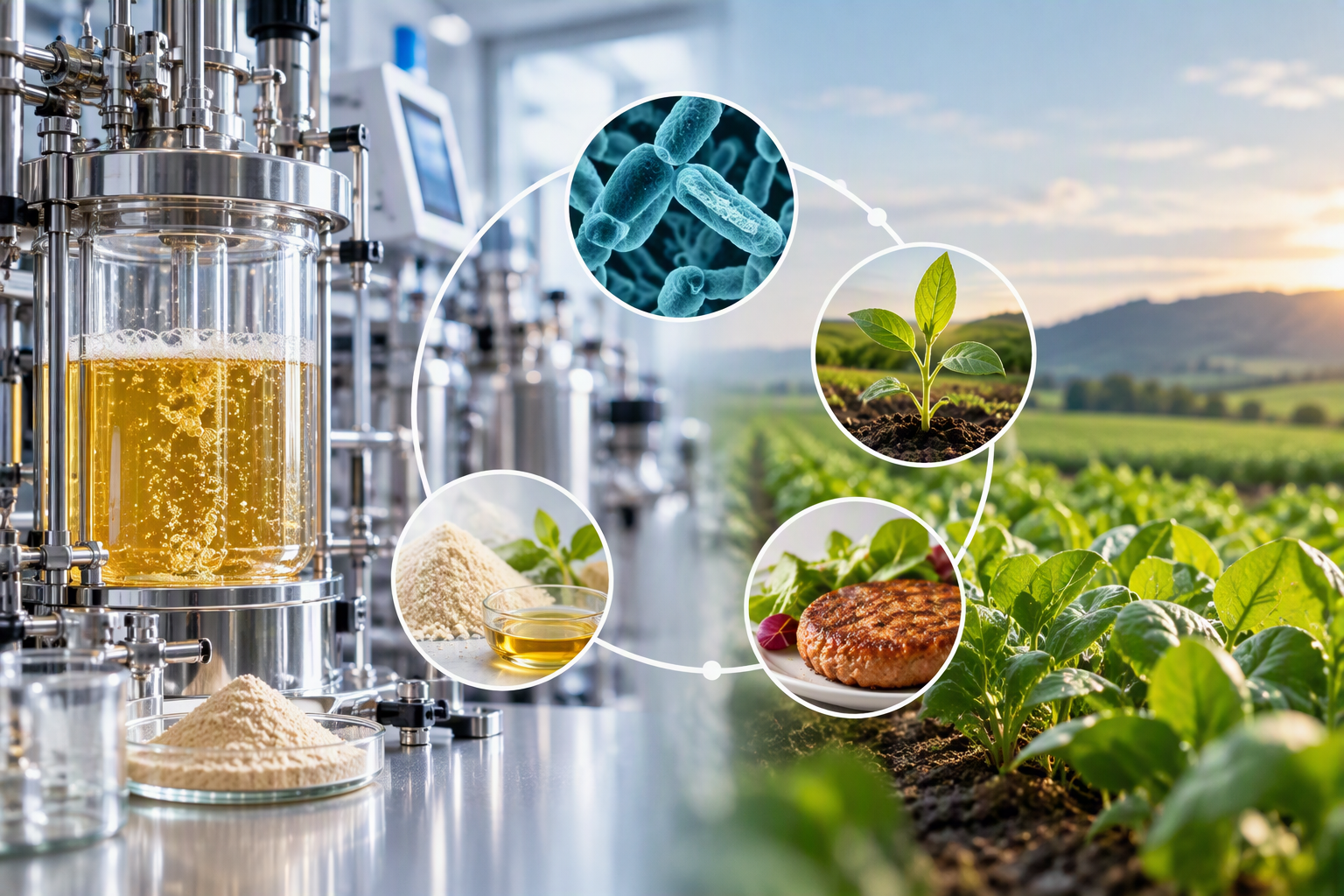

Advances in biotechnology are expanding the tools available to address food supply challenges and improve the sustainability of food production. Beyond cellular agriculture and precision fermentation, biotechnology is enabling innovations across the food and agriculture value chain. New breeding and genome-editing technologies are supporting the development of crops with improved tolerance to drought, heat, pests, and diseases, while biofortification approaches are being used to enhance the nutritional value of staple foods. Biotechnology is also contributing to the development of biological crop inputs, including biostimulants, biofertilizers, and biopesticides, that can improve resource efficiency and support more resilient agricultural systems. In addition, emerging applications in aquaculture and seafood production are exploring new ways to meet growing demand while reducing pressure on natural ecosystems. However, the successful deployment of these innovations depends not only on technological progress, but also on supportive regulatory frameworks that provide clarity, ensure safety, facilitate market access, and encourage investment. Together, innovation and regulation are creating new opportunities to strengthen the resilience, productivity, and sustainability of food systems.
Several biotechnology-based approaches are gaining attention:
- precision fermentation to produce proteins, enzymes, vitamins, and functional ingredients;
- cellular agriculture to cultivate animal-derived products without conventional livestock production;
- biological ingredients such as probiotics and bioactive compounds;
- circular production models that convert agricultural by-products into valuable materials through microbial processes.
Recent regulatory developments are helping create a more supportive environment for biotechnology solutions that can strengthen food system resilience. In the European Union, progress on the proposed Regulation on Plants Obtained by Certain New Genomic Techniques (NGTs) aims to facilitate the development of crops with improved resistance to drought, pests, and climate-related stresses, while maintaining safety oversight. At the same time, updates to the EU Novel Food Regulation guidance by European Food Safety Authority (EFSA) are providing greater clarity for the assessment of innovative foods and ingredients produced through technologies such as precision fermentation. In agriculture, the implementation of Regulation (EU) 2019/1009 continues to support the commercialization of microbial biostimulants by establishing a harmonized framework for products that improve nutrient use efficiency and crop resilience. However, regulatory frameworks have not advanced at the same pace across all biotechnology fields. While pathways for gene-edited crops, precision fermentation-derived ingredients, and agricultural biologicals continue to develop, cellular agriculture remains largely without a dedicated regulatory framework in the European Union, creating uncertainty around approval requirements, timelines, and commercialization pathways for cultivated meat and other cell-based food products. Together, these developments highlight both the progress made and the regulatory challenges that remain in enabling biotechnology to contribute to more sustainable, productive, and resilient food systems.
Part 2: Biotechnology and changes in crop management
Biotechnology is also enabling alternatives to conventional agricultural inputs, offering new approaches to improve productivity while reducing environmental impacts. Biostimulants: improve plant performance by enhancing nutrient uptake, stress tolerance, and overall crop resilience. They can be derived from plant extracts, seaweed, microorganisms, organic compounds, or microbial metabolites.
Biofertilizer: contain beneficial microorganisms that improve nutrient availability and support plant growth through natural biological mechanisms. Unlike petrochemical fertilizers, which provide nutrients directly, biofertilizers enhance plants' ability to access and utilize nutrients already present in the soil, helping improve resource efficiency and reduce dependence on chemical inputs.
Microbial biocontrol agents: use beneficial bacteria, fungi, or other microorganisms to suppress plant pathogens and pests through naturally occurring biological interactions. These approaches can complement integrated pest management strategies and reduce reliance on conventional chemical crop protection products.
Together, these technologies illustrate how biotechnology can support more resource-efficient food production while reducing environmental pressures associated with conventional practices.
Part 3: Cellular agriculture and alternative food production
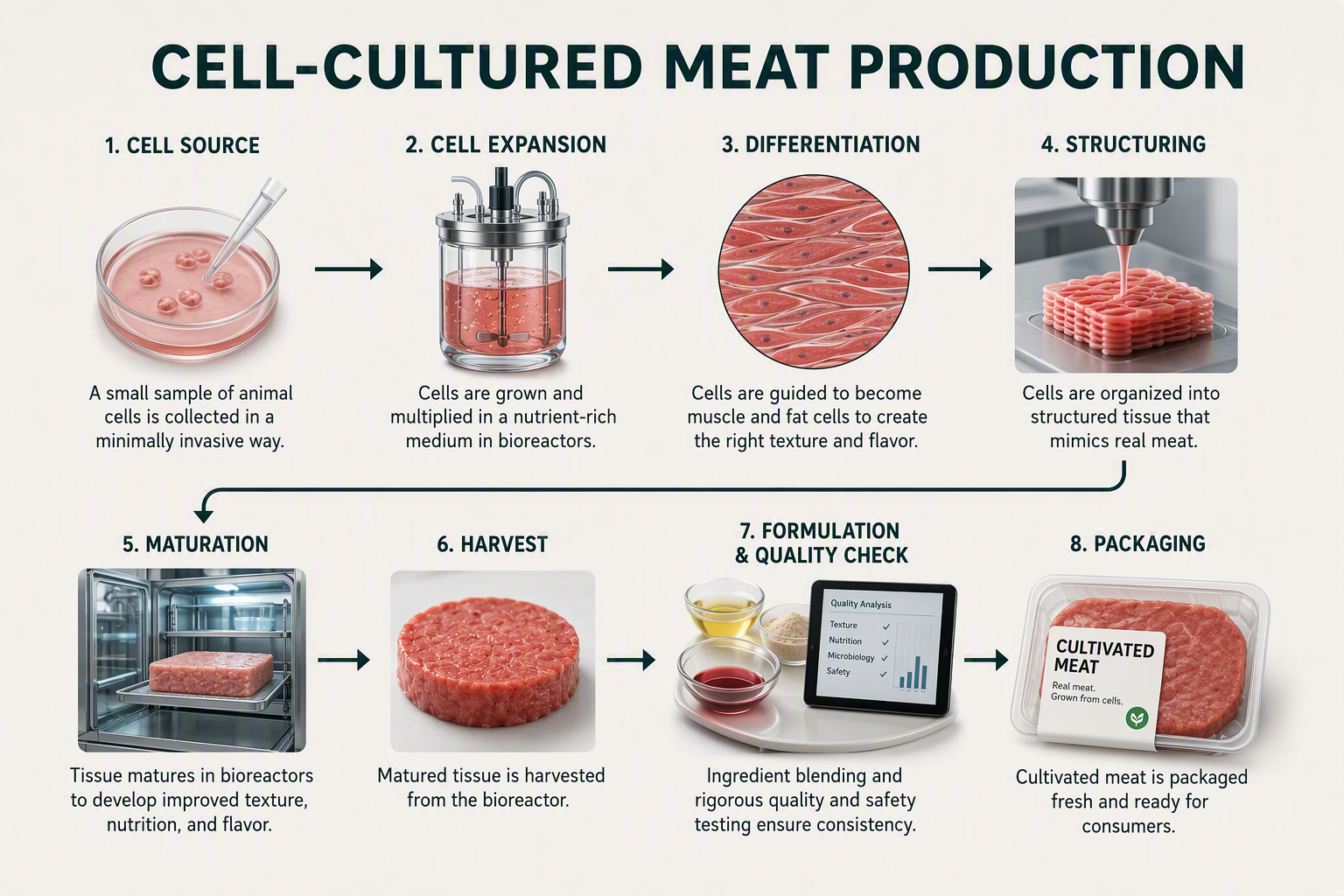
Growing demand for protein and other animal-derived products has accelerated interest in alternative production platforms. Among these, cellular agriculture and precision fermentation have emerged as promising approaches for producing food ingredients independently of conventional livestock systems.
Cellular agriculture uses animal cells cultivated under controlled conditions to generate products such as meat, seafood, fats, and other functional food components. Production typically begins with a small population of cells that is expanded through successive cultivation stages under carefully monitored conditions.
Saving Seafood with Biotech
Demand for seafood will soon pass what the fishing and aquaculture industries can sustainably achieve. Overfishing is depleting populations in both fresh and saltwater habitats, while marine and freshwater farming have detrimental environmental consequences. Currently, more than 90% of marine food production globally is facing environmental threats including pollution, climate change, and habitat degradation. Without production solutions, there could be a 50-million-ton seafood shortage⁸ by 2050.
Cell cultured fish is a plausible solution that can be made from muscle cells, fat cells or fibroblasts taken from healthy fish using bioreactors. Cells are grown on microcarriers or three-dimensional scaffolds (collagen, elastin, laminin, fibronectin, or even edible textured soy protein) in the bioreactor. By maintaining consistent growth conditions across scales, alternative protein makers can preserve the integrity and quality of cell-cultured products as production volumes increase. Importantly, the controlled and sterile environment of the bioreactor means cultured fish products are not contaminated by mercury, antibiotics, microplastics, or parasites and requires no wild or farmed fish to be killed.
Read more making cell cultured seafood in this blog overviewing Solaris Biotech work with Wildtype, a San Francisco-based company focused on creating cultivated seafood.
The success of these processes depends on maintaining precise control of biological and engineering parameters throughout development and scale-up. Critical factors include nutrient delivery, oxygen transfer, mixing efficiency, and process consistency.
Although commercial adoption is still evolving, advances in cell culture technologies, media development, and bioprocess engineering are helping address current barriers related to scalability and production costs. Research suggests that alternative protein systems may contribute to significant reductions in land use, water consumption, and greenhouse gas emissions when compared with conventional animal agriculture.
Part 4: Alternative Proteins in Expanding the Future of Food Production
Growing demand for protein and other animal-derived products has accelerated interest in alternative production platforms. These approaches aim to complement conventional agriculture by providing additional sources of proteins and functional food ingredients while reducing dependency on traditional livestock production systems. Their potential benefits include improved resource efficiency, increased supply chain resilience, and greater flexibility in food production.
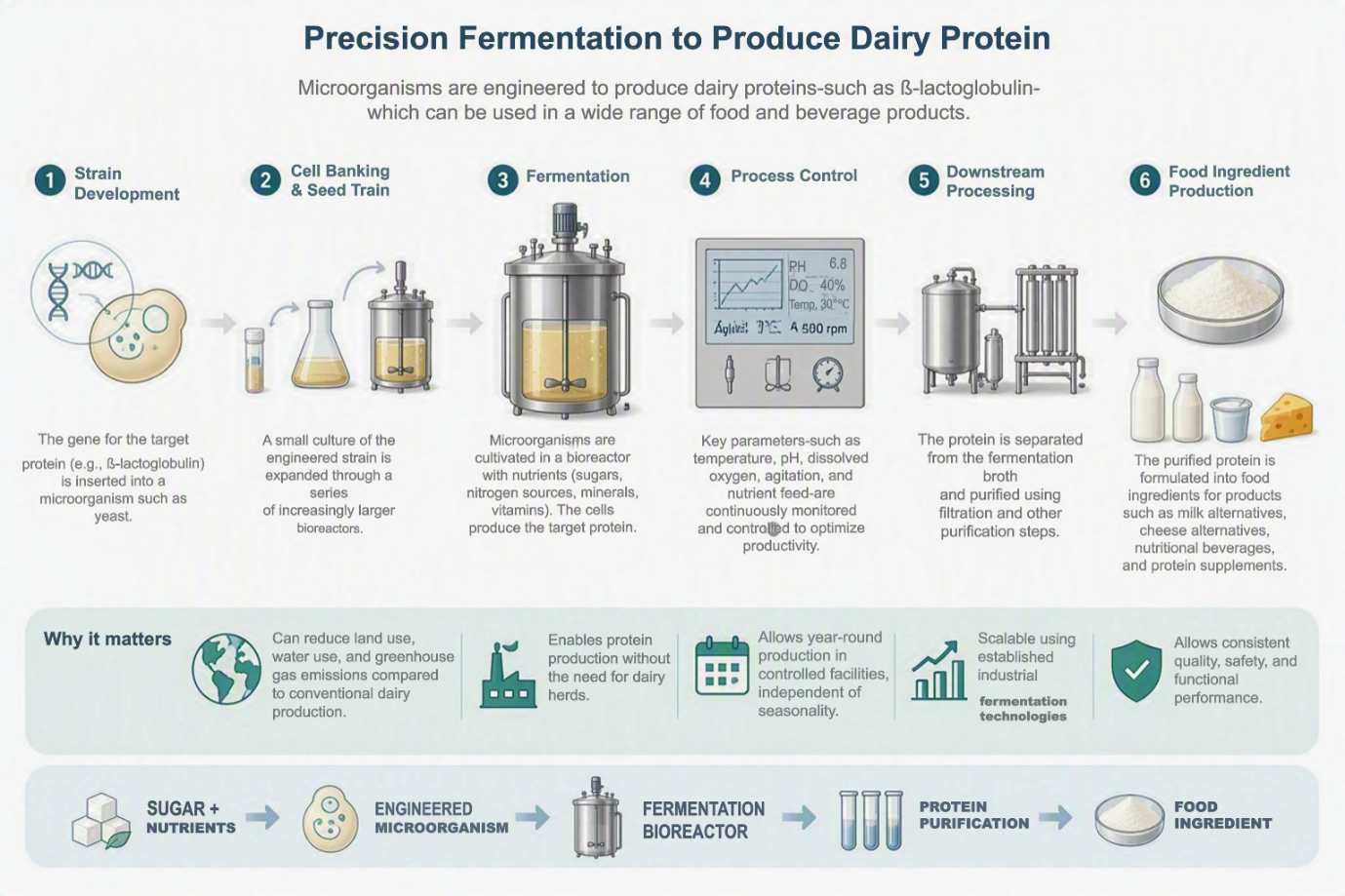
Several technological approaches are being explored. Precision fermentation uses microorganisms such as yeast, fungi, and bacteria to produce specific proteins, fats, enzymes, vitamins, and other functional ingredients. Cellular agriculture uses cultivated animal cells to produce meat, seafood, dairy components, and other food products under controlled conditions. Biomass fermentation, meanwhile, leverages the rapid growth of microorganisms to generate protein-rich ingredients directly from microbial biomass.
While these technologies are still developing, research suggests they have the potential to reduce land use, water consumption, and greenhouse gas emissions compared with conventional animal agriculture. Their successful commercialization will depend on continued advances in biotechnology, scalable bioprocessing infrastructure, and supportive regulatory frameworks that enable safe and efficient production at industrial scale.
Part 5: The Role of Scalable Bioprocess Technologies
Contact Us & Request Info
Thank you for your submission.
Our team will carefully review your request and provide a prompt response.