


BEYOND THE BENCH. Driving Innovation in Precision Fermentation for Functional Ingredients and Additives with Solaris Biotech
Once focused mainly on FoodTech, the Ingredients & Additives sector now spans pharmaceuticals, nutraceuticals, cosmetics, and biotechnology. As the industry evolves, microbial fermentation is emerging as a major driver of innovation.
Biotech in Ingredients & Additives (I&A)

The Ingredients & Additives sector plays a critical role in shaping the quality, safety, and functionality of modern food and beverage products. From texture and stability to nutritional enhancement, these components are essential to meeting evolving consumer expectations.
Today, the industry is undergoing a significant shift. Traditional chemical synthesis and extraction methods are increasingly complemented - or replaced - by biotechnological y-driven production, offering more sustainable, efficient, and precise alternatives.
What are Ingredients & Additives?
- Ingredients: functional or nutritional components naturally present or produced for food formulation, contributing to structure, nutrition, or core functionality.
- Additives: compounds added in small amounts to improve shelf life, stability, texture, safety, or appearance.
Fermented ingredients and additives market is broad and diverse. It is traditionally divided into two major segments:
- Conventional fermentation: includes amino acids, organic acids, enzymes, vitamins, and other long-established products.
- Precision fermentation: includes alternative proteins, enzymes, lipids, and specialty biomolecules such as dairy proteins and egg proteins generated through microbial hosts.
Market overview (I&A)
The Ingredients & Additives market produced via fermentation continues to grow steadily. Conventional fermented ingredients form the core of the sector and reached USD 41-56 billion in 2026, with growth expected to continue between 6-14% CAGR through 2031.
Within this segment, amino acids remain the largest category, driven by strong demand from pharmaceuticals, nutraceuticals, and food industries.
The real acceleration comes from precision fermentation, projected to grow from USD 3.4–4.1 billion in 2025 to USD 70-142 billion by 2035, with CAGRs above 40%.
This growth is fueled by rising use of fermentation-derived proteins, enzymes, fats, and specialty molecules.
Globally, the United States remains the largest market for fermented ingredients and additives, supported by mature food and biopharma sectors.
Yeasts represent the most widely used organism for fermented ingredient production due to robustness and high productivity.
Market Trends & challenges
Consumer expectations are increasing shifting rapidly, especially in Europe, where demand for cleaner, more natural products is rising. In 2022, 75% of European consumers preferred natural, organic, and minimally processed foods, pushing brands to explore fermentation‑derived alternatives as cleaner, more sustainable options.
| Category | Topic | Summary |
Market Drivers
| Sustainability & Environmental Impact | Precision fermentation can reduce land use (–95%), water consumption (–80%), and greenhouse gas emissions (–70%), offering a lower footprint alternative. |
| Food Security | With global protein demand projected to rise +70% by 2050, fermentation provides a stable and climate-resilient production method. | |
Current Challenges
| Regulatory Complexity | GMO-based processes require strict proof of no residual gGenetically- modified DNA, allergens, or toxins, making approval demanding. |
| High Production Costs | Expensive bioreactors and costly downstream processing continue to limit large‑scale adoption. | |
| Consumer Acceptance | Perception remains mixed, with some consumers still cautious toward “cell‑based” or engineered fermentation foods. |
Key Fermentation-Derived Ingredients and Market drivers
Functional ingredient fermentation is experiencing steady growth, driven by increasing demand for clean-label, sustainable, and functional solutions across the food, nutrition, and biotechnology markets.
Clean-label expectations are pushing manufacturers toward ingredients perceived as natural, recognizable, and minimally processed, increasing interest in bio-based and fermentation-derived alternatives to traditional synthetic additives.
At the same time, sustainability challenges are reshaping production strategies. Traditional ingredient sourcing often depends on resource-intensive agricultural systems or fossil-based inputs, which are vulnerable to climate variability and supply chain disruptions. Biotechnology offers a more stable and efficient approach, enabling production with reduced resource consumption and improved consistency.
Another key driver is the rising importance of health and functionality. Demand for protein alternatives, bioactive compounds, and functional ingredients is increasing, requiring more precise and scalable production methods than conventional processes can offer.
Together, these forces are redefining not just what ingredients are used, but how they are produced, positioning biotechnology as a central enabler of the industry’s future.
To meet these evolving demands, fermentation has become a key platform for producing high-value ingredients at scale. Among the most widely used are citric acid and whey protein, both valued for their functionality, versatility, and compatibility with modern clean-label expectations.
Citric Acid: A cornerstone ingredient in food applications

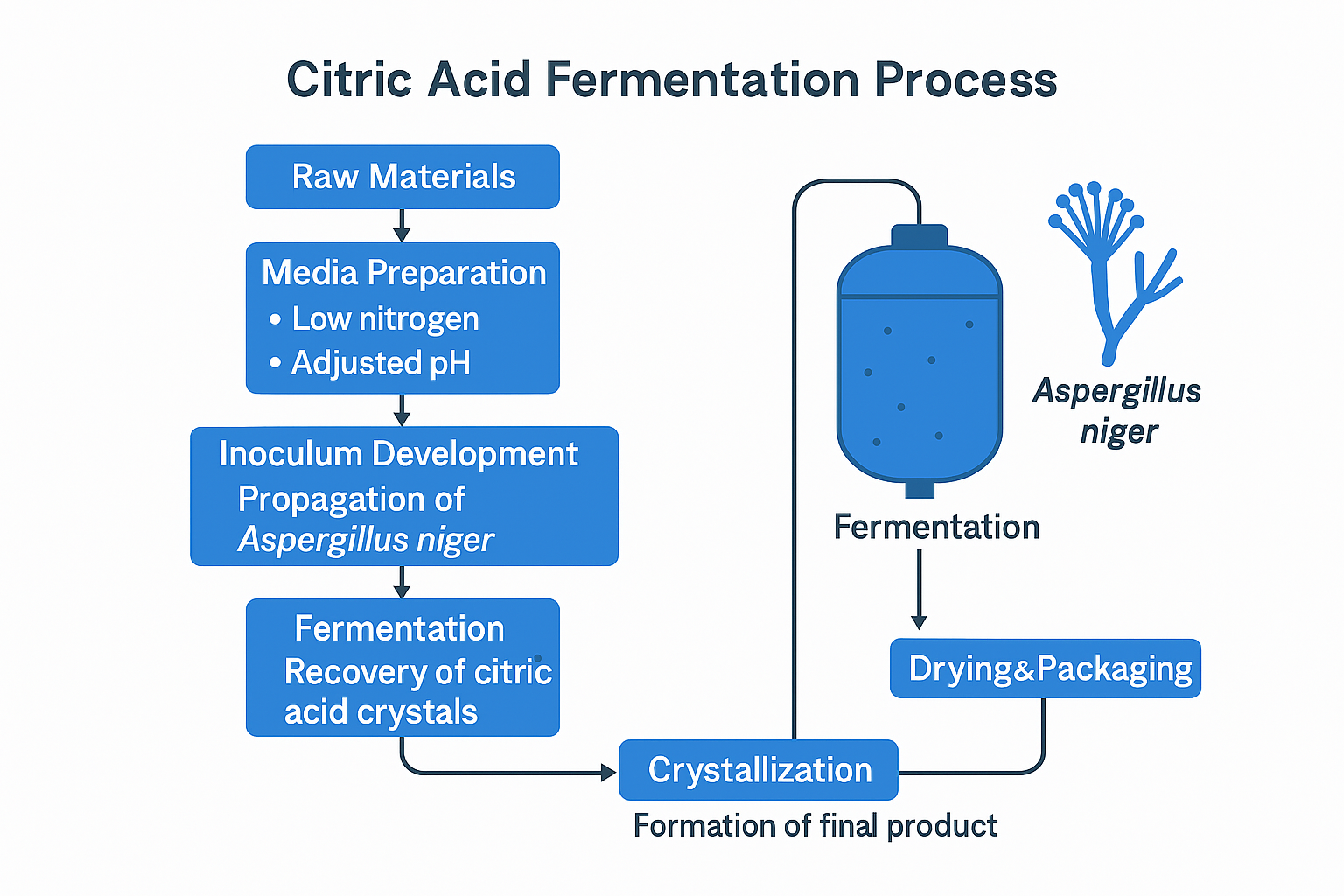
Citric acid fermentation is one of the most established processes in the food industry, enabling the large-scale production of this organic acid through microbial fermentation. It acts as an acidulant, preservative, flavor enhancer, and pH regulator. Its clean taste, stability, and long-standing use in food and beverage applications make it a key ingredient in beverages, confectionery, dairy products, and shelf-stable foods.
Below is a simplified overview of the citric acid fermentation workflow, illustrating how raw materials are transformed into the final crystallized product through controlled microbial processing.
Whey Protein: A high-value functional ingredient

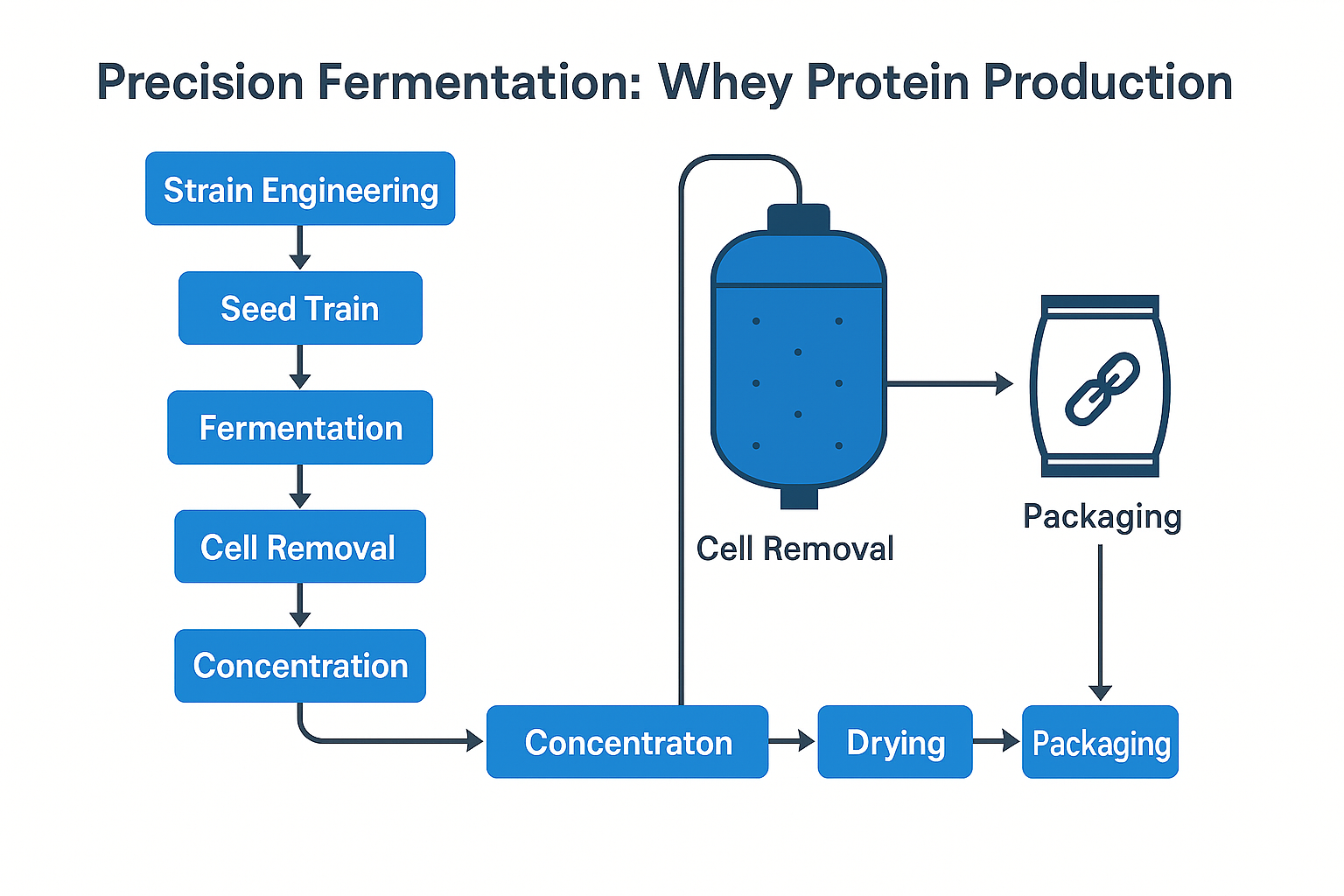
Whey Protein is a high value functional ingredient traditionally derived from dairy whey but increasingly produced through precision fermentation to ensure purity, consistency, and sustainability. It provides superior emulsification, solubility, foaming, and nutritional properties, making it essential in sports nutrition, dairy alternatives, bakery, and functional beverages.
The diagram below outlines the precision fermentation workflow for whey protein, showing how engineered microbial strains are transformed into a purified, functional protein ingredient through a series of controlled bioprocessing steps.
Solaris Biotech’s role in Ingredients & Additives innovation
Solaris Biotech supports the development and scale-up of fermentation-derived ingredients and additives by providing advanced solutions, including precision fermentation bioreactors, fermenters, and control systems for applications ranging from enzymes and organic acids to alternative proteins, vitamins, and specialty bioactive compounds. Our solutions cover the full development journey, from benchtop systems for early R&D and process optimization to pilot and industrial equipment, enabling precise control of critical parameters and a smoother transition toward larger-scale production.
- By helping manufacturers improve process efficiency, reproducibility, and scalability, Solaris Biotech enables the transformation of microbial potential into industrial value, supporting the creation of high-value ingredients for food, nutrition, and biotechnology markets.
- Supporting innovators across the Ingredients & Additives sector, Solaris Biotech provides the technology infrastructure needed for applications such as:
- Development of novel ingredients and additives for bakery and food applications through optimized microbial fermentation processes.
- Scale-up of precision-fermented proteins for food and beverage applications, helping manufacturers improve sustainability and production efficiency.
- Production of nutrition-focused ingredients and functional molecules to meet growing demand for innovative and functional solutions.
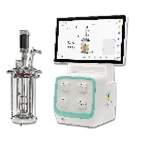
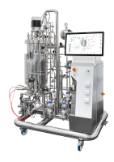
Solaris product: Jupiter and M-series
BENCHTOP BIOREACTOR (Jupiter) | PILOT BIOREACTOR (M-series) | |
| Type | Lab bioreactor | Pilot bioreactor |
| Volume Range | 2L to 10L | 30L to 200L |
| Technical Role | Used for early R&D, in screening and process development. Ideal system before scaling up. | Ideal for process optimization and manufacturing |
Our solutions enable:
- Process development and optimization across lab and pilot scales
- Precise control of critical parameters (pH, dissolved oxygen, temperature, agitation)
- Seamless scale-up from early-stage research to industrial application
By supporting both microbial and enzymatic processes, Solaris Biotech helps transform innovative ideas into reliable, scalable production systems.
The future of functional innovation is fermentation-led.
The evolution of the Ingredients & Additives sector reflects a broader shift toward more sustainable, transparent, and functional food systems.
Biotechnology is not just an alternative production method,it is becoming the foundation for how next-generation ingredients are designed and manufactured.
From improving resource efficiency to enabling entirely new categories of functional compounds, bioprocessing is helping the industry respond to some of its most pressing challenges.
At Solaris Biotech, we contribute to this transformation by empowering innovators to move from concept to scalable reality, supporting a future where ingredients are not only more effective, but also more sustainable and aligned with global needs.
Solaris Biotech — Empowering innovation. Growing the future.
Stay tuned for our next chapter in Food & Beverage.
Contact Us & Request Info
Thank you for your submission.
Our team will carefully review your request and provide a prompt response.